Home

Latest news

Power Cut

2013-04-27, During the weekend a scheduled power cut required the servers to shut down. The services were not available until Monday morning.

VISPA Web server opened

2013-03-11, VISPA Web server has been opened to the interested public.

VISPA workshop

2013-03-11, During the second week of March, the VISPA Spring 2013 workshop was held.

VISPA Web server

Find the current status and information about the project here: ServerStatus.

VISPA Web server v0.5 released

The VIPSA Web server has been released in a tested beta version and is here available: VISPAWebServer

VISPA in RWTHinsight

2012-12-21, RWTH press reports on Blended Learning concept with VISPA: Lernen im Netz

2012-12-18, More than 100 RWTH students regulary use the novel VISPA Web server successfully for their data analyses.

VISPA New York Summary

2012-12-17, A Server-Client-Based Graphical Development Environment for Physics Analyses (VISPA), Proc. CHEP 2012 NY, USA, 2012 J. Phys.: Conf. Ser. 396 052015

VISPA Publication

2012-08-28, A Development Environment for Visual Physics Analysis, H.-P. Bretz, et al., 2012 JINST 7 T08005, arXiv:1205.4912

Visual Physics Analysis

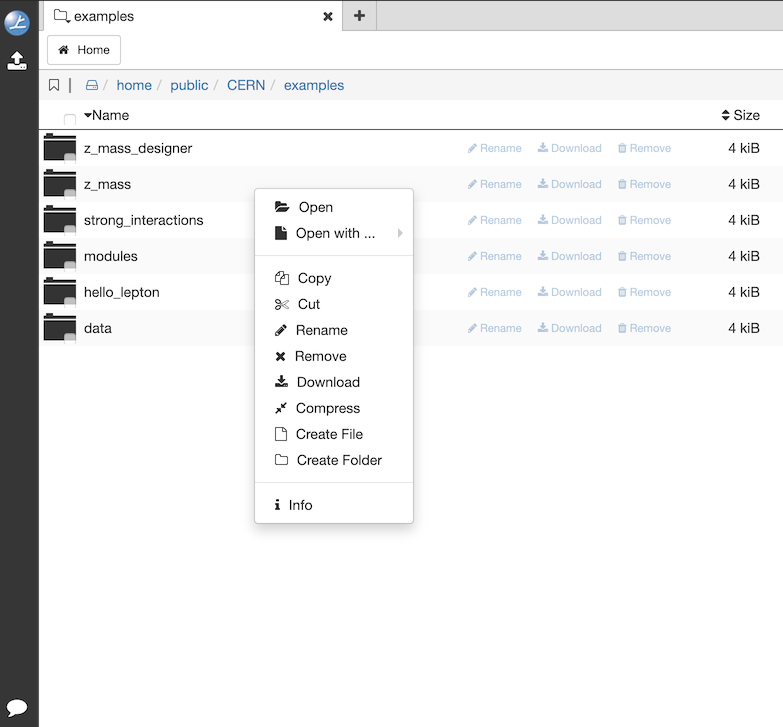
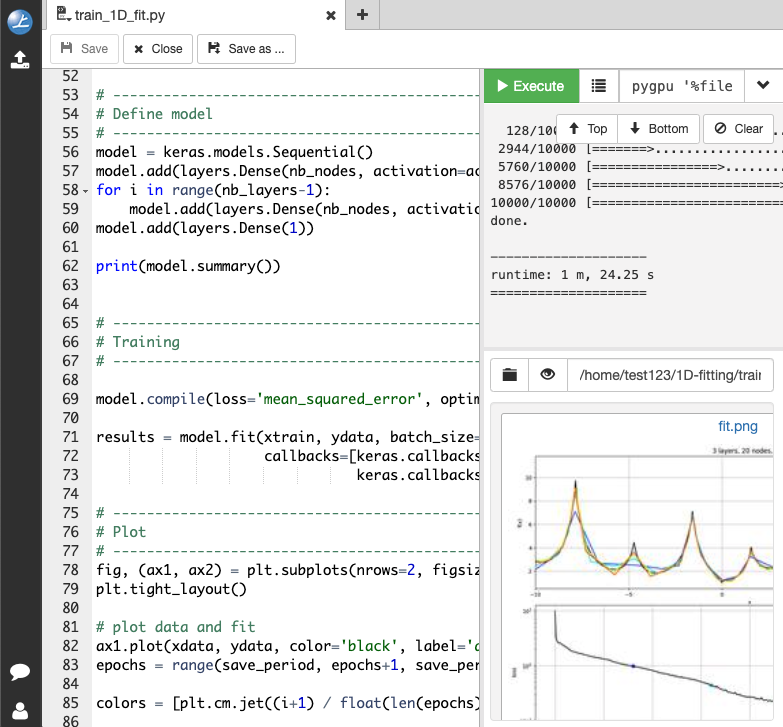
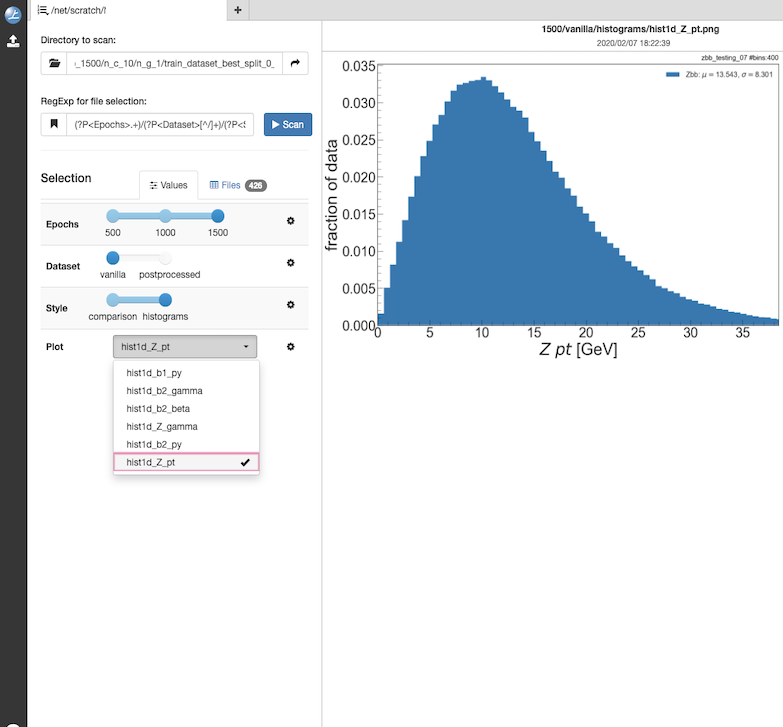
VISPA provides a development environment for physics data analysis with special emphasis on high energy physics, and astroparticle physics. It is based on a combination of graphical and textual steering. VISPA is available as a desktop version, or can directly be accessed through your web browser:

Downloads

  • Install the desktop version of VISPA from here.

  • For advanced users wishing to setup their own server-client system download the VISPA web-system here.

Scope

The primary aim of VISPA is to support physicists in prototyping, performing, and verifying a data analysis of any complexity. The combination of graphical and textual steering has been shown to speed up design and development in other fields, e.g. hardware control using the LabView program.

vispa-analysis_designer_thumb.png To deploy a visual environment for physics analysis, the desktop version of VISPA provides a multi-purpose window tool with a three-column structure - a navigator panel, a window for graphical displays, and a property panel. For the text-based programming, both the C++ and the Python languages are supported. VISPA heavily uses the Physics eXtension Library (PXL). The most prominent features of this toolkit are the ability to store arbitrary user data, management of relations, a copyable container holding different aspects of physics events, and a fast I/O.


CategoryHomepage CategoryHomepage CategoryHomepage CategoryHomepage CategoryHomepage CategoryHomepage CategoryHomepage CategoryHomepage